Es mostren els missatges amb l'etiqueta de comentaris Tigoni - Limuru. Mostrar tots els missatges

dimarts, 12 de febrer del 2008

Els bisbes davant les eleccions

Com decideix el vot un cristià? Poden dir-hi alguna cosa els bisbes? I a la resta de ciutadans?

Aquestes preguntes que ara estan de moda per la nota de la Conferencia Episcopal davant les properes eleccions no són alienes a Kenya.

Allà, al mes d'agost ja es va glossar a les homilies del diumenge una carta pastoral dels bisbes davant les eleccions de desembre. No deixa de tenir la seva gràcia comparar ambdues notes (la dels bisbes kenyans està sencera aquí). Per exemple, fan campanya decidida per entendre Kenya com un país i una democràcia en construcció, parlen de la corrupció, de conflictes d'interessos o de la necessitat d'una educació cívica.

Algunes de les consideracions dels bisbes, que en aquell moment ens van semblar simplement curioses, amb els mesos s'ha vist que eren importants. Copiem les característiques que cal que tingui un candidat (wananchi és el terme swahili que significa ciutadans):


L'arquebisbe Ndingi mwana a' Nzeki, arquebisde de Nairobi fins l'octubre de 2007

5. QUALITIES OF CANDIDATES FOR ELECTIONS

We are calling on all Kenyans to inform themselves adequately on those seeking election. It is not enough to know the candidates qualities vaguely. We must establish their stand on relevant issues and know their track record on honesty and uprightness.
There is no shortage of candidates for the many elected posts in our country . From our perspective, wananchi must be careful to elect honest and trustworthy candidates. If a corrupt person is elected , the long cycle of deprivation and abuse of office will be prolonged and moral fibre of our nation will continue to be eroded.
Our dear Kenyans, we would like to outline some of these qualities that we should look for as we exercise our democratic right. All of us citizens expect the following values or principles to be incorporated into the vision of our leaders.
1. Religious freedom for all people living in Kenya be upheld and respected.
2. The dignity of each and every human person be enhanced and protected
3. Everybody should respect the basic right to life from the moment of conception to natural death. This means no abortions, no Euthanasia and no capital punishment. The fifth commandment of God instructs "you shall not kill" (Ex.20:13).
4. Elected leaders shall recognize the centrality of the family in society and defend it.
5. Elected leaders shall promote the common good where all people participate and benefit from the goods available. Selfishness and greed must stop.
6. Leaders must protect the interest of the weak, and the poor and the marginalized in society wherever they found.
7. Leaders must support measures which guarantee security for all in whichever place or situation in which people find themselves. The rule of law and order must be up held.
8. Idleness is causing a lot of problems for our country. So leaders must promote the right to work, the right of workers and employees. Kenya must be a working nation if it has to achieve its goals.
9. Our political leaders must work towards providing access to water regular food, good roads, quality education and health care.
10. Leaders must ensure that measures are taken to protect the environment.
11. Elected leaders must foster the culture of living together in peace, justice for all, dialogue, political tolerance and living according to the rule of law and order. The leaders should not divide wananchi along tribal lines but work-together as unified nation, for prosperity.
12. Any candidate promoting violence or inciting people to violence or promoting hatred should not be elected.
13. Kenyans need elected leaders who will handle the perennial problem of land affecting the nation. Some individual people own massive lands and others are born and live in the gutters and streets of our cities and in the mountains. Many others are perpetual squatters and thus are reduced to sub-human living. We urge displaced persons should be resettled.
14. Leaders must ensure more equitable distribution of natural and national resources of Kenya to help build one nation.


I les últimes recomanacions:

8. POST-ELECTION

We ask that all those that wananchi have not elected to accept the results and cooperate fully with those who have been elected. Let the election increase the bonds of unity in our nation.

9. NECESSITY OF CIVIC EDUCATION

In order to vote correctly people must have an informed mind and conscience. They must know the relevant issues and the qualities of candidates as outlined above. Civic education is therefore a necessity. From past experience, we know that the quality of civic education has not formed people enough. We have witnessed the organizing of groups to incite violence, as well as “the buying of votes” or voting cards. Too often, the civic education sessions have been turned into political rallies. This time around, we are appealing to all converned to give space for proper civic education. This is part of the “level playing field” that is often forgotten or not even mentioned.

The people must not be impoverished or be denied their basic rights by the use of money, or kind, to influence their voting patter: such practices dehumanize people and make them unduly dependent on the purpoted “bread-providers”. The role of civic education is to educate not to manipulate. And therefore, like in the past, the Catholic Church will be fully involved in civic education through its Catholic Justice and Peace Commission.

10. CONCLUSION

We appeal to all Catholics and people of good will, to employ dialogue at this sensitive time for the betterment of everyone. The relationships that are established in a climate of dialogue overcome ethnic divisions and ideological differences. Dialogue prompts people to seek out what unites rather than what divides them.

Finally, our strong message is an appeal to all to endeavour to build the civilization of love. It is only love for God and for one another that can transform the human person and the entire Kenyan society.


No pensàvem pas a l'agost que aquestes línies fossin advertències tan profètiques.


Una alumna del col·legi Loreto, a Limuru, amb la parròquia de St. Joseph

diumenge, 10 de febrer del 2008

Notícies de Kimlea

Escriuen des de Kimlea sobre la situació en aquella zona de Kenya, a la qual hem fet referència en diversos posts. A més de moltes notícies sobre la Clínica, Maramba i Gatina, que ja explicarem, la Frankie diu:

Although there were skirmishes in Limuru and Tigoni, they did not reach us, thanks be to God. The people in Maramba and Gatina are okay. There is no problem in the plantations now but in some of them the people who were not Kikuyus have been sent away to their ancestral homes.

In Kimlea we have not been affected at all but there are several students whose families were affected and some are living in the displacement camps in a miserable situation. We are studying ways of helping them even if only with food, clothing and medicine. We have been going with groups of our students to visit those in the displacement camp in Limuru (about 1000 families) and the situation is pathetic. It makes me cry and I feel helpless to solve a problem of such magnitude.

Kianda Foundation is currently working on a plan to train the young girls and mothers from these camps in Kimlea until they are settled elsewhere.
És moment d'aconseguir encara més recursos! Recordem a tothom que hi ha una festa divendres vinent amb aquesta finalitat...

dijous, 31 de gener del 2008

Desplaçats a Tigoni

Sembla que a l'estació de policia de Tigoni s'hi va amuntegant gent. la CNN ho explica així:

Just Wednesday, Mwangi said, 6,000 people converged on an internally displaced persons camp on the very day it opened, in the town of Limuru, in central Kenya.

That camp is one of roughly 300 internally displaced camps in Kenya, which has long sheltered hundreds of thousands of refugees from other nations in sprawling refugee camps but has erected such camps for uprooted Kenyans only after natural disasters, Mwangi said.

"We've never known internally displaced camps like this," he said.

Però la premsa kenyana diu clarament:
In Limuru, 6,000 displaced people were camping at the Tigoni police station, up from only 45 on Friday last week.


Un policia vigilant un camp de refugiats prop de Limuru (EFE)


Intentarem tenir notícies noves de les de Kimlea.

Plantacions en crisi

Per molt que vulguem, no podem prescindir del que està passant a Kenya.

Una notícia recent publicada per la UN Office for the Coordination of Humanitarian Affairs explica com la situació actual ha afectat les plantacions dels voltants de Limuru, on és Kimlea.
Blow to horticulture

The horticultural industry, which is a major employer, has also been hard hit. "There is fear all over with vehicles being burnt. Most of our clients are also not placing orders for our products," Gerrison Wachira, a grader with the horticultural farmers and exporters' organisation, said.
"We rely on produce coming in from some of the worst-affected areas, such as Eldoret, for passion fruits," Wachira said.
He said the organisation, which had already laid off casual workers, had been on the verge of closing. "We are going to ship our produce for the first time this month next week," he said.
The organisation normally ships its produce three times a month and employs at least 80 casual workers who earn 300 shillings ($4) per day. Other horticultural organisations employ hundreds of casual workers.
"Most firms have reduced their manpower," he said.
The organisation, which mainly relies on road transport by night, has been hit by the insecurity, with most stakeholders considering using local airports, which are more expensive, to transport their produce.
"The government should ensure that there is security for everyone," Wachira said. "The leaders should talk together and preach peace; they are the ones who have not communicated with the people."
According to the Secretary General of the Kenyan chapter of the Central Organisation of Trade Unions (COTU), Francis Atwoli, the crisis will have hit the broader economy.
Already, at least 60,000 people lost their jobs in tea farms in Kericho, 20,000 in Nandi hills, and 10,000 in Limuru, Atwoli said. Another 40,000 workers were let go in Naivasha, with the government providing security in the horticultural farms in the area, he said. Hundreds more had lost jobs within commerce, in banks and supermarkets, for example, after finding it unsafe to continue working in some areas, he said.
At least 400,000 people are expected to lose their jobs if the crisis continues, with a knock-on effect in neighbouring, landlocked Uganda, which relies heavily on Kenya's transport network for its imports.
Some industries in the country were not functioning as they should, with employees being laid off, Uganda's deputy prime minister, Eriya Kategaya, said on local television on 30 January. "Factories are being forced to retrench workers," Kategaya said.

divendres, 4 de gener del 2008

És segura Kenya?

L'estiu del 2007 Kenya era segura... amb limitacions, sobretot pels occidentals.

Tal com ens deien sovint les nostres amigues, qualsevol kenyà pensa que qualsevol blanc està forrat. Per tant, sempre hi ha el risc que vulguin robar-te o atracar-te. De tota manera, moltes de les seves recomanacions valdrien per qualsevol passejada per les Rambles o els Encants, o per vigilar qui entra amb tu al portal de casa. El que passa és que allà crides l'atenció, si ets europeu, al primer cop de vista.

Val a dir que sovint, però, tot i intentar fer cas del que ens deien (al cap i a la fi érem a casa seva), ens adonàvem que tenien més por elles que no pas nosaltres. Desplaçar-nos a les fosques entre l'escola i la clínica, on dormíem, els feia patir (bé, i a algunes porugues també!). Anar al mercat (el mercadillo) masai requeria prendre mesures de seguretat ("atenció amb bosses, càmares de fotos, els que es fan els simpàtics...").

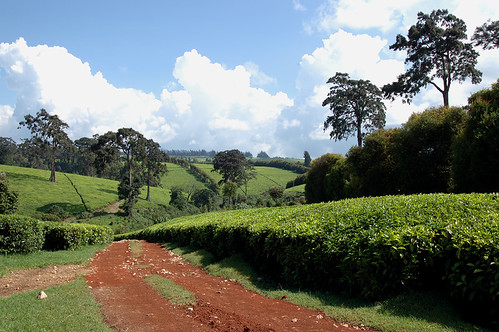
Però el que més ens costava d'entendre era no poder sortir a fer un volt pels voltants de Kimlea. Amb la placidesa i bellesa de l'entorn i el somriure cordial de la gent!


I aquí en podeu veure unes altres a Flickr, de la mateixa zona (però res que veure amb nosaltres)

Quan les de Kimlea van saber que havíem anat a fer un tomb pels voltants, quatre o cinc; que algú havia anat a córrer, que l'altra havia tornat sola de Gatina... es van esgarrifar. El criteri era sempre més de dues i si era possible amb una africana. Fins i tot per la carretera asfaltada. I per segons quins camins, ni pensar-ho. L'única blanca de Kimlea, la directora del càtering de Tigoni Center, deia que per alguns camins només hi anaven una bona colla, fins i tot essent totes del país!

Dels seus comentaris (una mica reticents, probablement per no crear-nos una inseguretat que no teníem) es deduïa que per segons qui blanca i dona era massa temptador. I van acabar confessant que ben a la vora hi havia hagut assassinats. Que els que homes joves que ja no poden assimilar els slums de Nairobi, s'emboscaven a les zones rurals del districte veí de Kiambu i assaltaven de tant en tant els qui passaven.

En altres ocasions també es van neguitejar. En una de les excursions que vam fer, vam preguntar per què no paràvem a dinar en una zona de boscos d'avets (si més no, ho semblaven). La resposta va ser que no era segur ni aturar-se. I no era pas solitària ni allunyada d'una carretera principal. En una altra sortida, el matatu es va avariar i quan va arribar un camió ple d'homes, aquest cop sí que en una carretera solitària, la kenyana que anava en aquell vehicle no va respirar fins que va arribar el matatu que anava a recollir-les.

Per tant, independentment de tribus i polítics, hi havia prou ambientillo com perquè, davant la sospita que el govern ha manipulat els resultats de les eleccions, els descontents o desesperats del país aprofitessin l'ocasió...

divendres, 9 de novembre del 2007

Kenya

Kenya és per a molta gent sinònim de safaris, Nacida libre i Memorias de África. Però la Kenya que hem conegut l'agost de l'any 2007 és molt diferent. Hem tigut la sort d'anar-hi per treballar in situ en alguns dels projectes que havíem estat preparant durant el curs, en col·laboració amb la Fundació Montblanc (a Catalunya) i la Kianda Foundation (Kenya).

A la nostra Kenya els nens petits ploraven perquè no havien vist mai una mzungu (persona blanca en swahili)...

Nosaltres érem aquí. Veieu Tigoni, ente Limuru i Kiambu (la capital del districte)? És força aprop de Nairobi. En aquest mapa híbrid podeu veure com destaca el verd de les plantacions, el vermell de la terra i, a la zona de l'esquerra, es veu ja la vall del Rift.

El nostre paisatge era aquest... si hagués fet sol!!

El paisatge és ondulat i verd
(copyright jipe82 / Mark Bidder @ flickr)